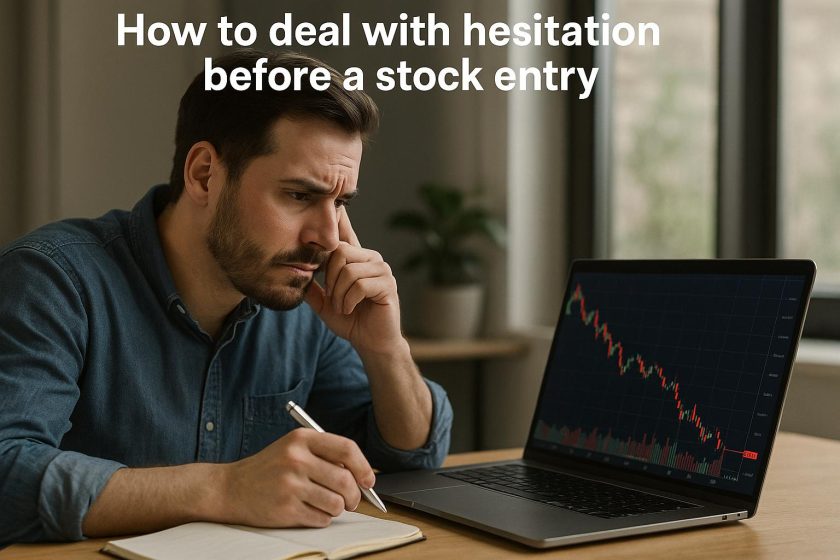
Understanding Hesitation in Stock Trading
Hesitation before making an entry in the stock market is a phenomenon encountered by both novice and seasoned investors alike. This hesitation often arises from the fear of financial loss, a lack of self-assuredness in one’s investment decisions, and the inundating amount of information available in the market. Acknowledging and understanding the root of your hesitation is a critical step in overcoming it. This article delves into several methodologies that can assist in managing and reducing hesitation effectively when trading stocks.
Conduct Thorough Research
Research forms the bedrock of informed and confident decision-making in stock trading. Both new and experienced investors must engage in rigorous analysis of financial statements, comprehend industry trends, and scrutinize market conditions before making decisions. Employ varied sources such as financial news websites, official company reports, and expert analyses to gather all-encompassing data. It’s imperative to verify the reliability of these sources to ensure that the information you rely on is accurate. Piecing together this information helps in forming a comprehensive opinion about the prospective potential of the stock in question.
Pro Tip: It would be prudent to leverage financial platforms which can furnish detailed insights into financial metrics and trends. These platforms can offer an analytical edge and alleviate some of the uncertainties that cloud investment decisions.
Develop a Solid Investment Strategy
Formulating a clear and disciplined investment strategy can play a pivotal role in diminishing hesitation. Irrespective of whether your interest lies in short-term trading or long-term investments, a well-architected plan serves as a blueprint to guide your financial decisions. Decisions should be based on criteria such as specific entry and exit points, risk appetite, and diversification strategies. Ensuring a balanced approach provides a sturdy framework within which investments can be managed.
Moreover, the adoption of specific strategies such as dollar-cost averaging can be beneficial. This technique involves investing a fixed sum at regular intervals, regardless of market volatility. Consequently, this method helps in mitigating the ramifications of market fluctuations, promoting a disciplined investment approach over time.
Utilize Technology and Tools
Modern trading platforms have equipped investors with a plethora of tools designed to aid in decision-making processes. Software and algorithms available on these platforms can forecast stock trends, providing valuable insights to traders. Additionally, investors can utilize tools such as stop-loss orders, allowing them to pre-determine the levels at which they are willing to sell a security to limit potential losses.
Exploring stock analysis tools offered by reputable financial service providers can provide significant advantages, enabling data-driven investment decisions. These tools help decipher complex data, making them more accessible and actionable for the investor.
Practice with a Simulated Trading Environment
Engaging with simulated trading platforms, colloquially known as “paper trading,” can be immensely beneficial for testing out investment strategies in a risk-free setting. These platforms, which make use of real-time market data, allow investors to acclimate themselves to the dynamics of stock trading sans financial loss. Such practice serves as a confidence-boosting exercise, enabling traders to refine their strategies before diving into the actual market.
Assess Emotional and Psychological Barriers
Often, hesitation in stock trading is not merely about statistical data or market analytics but has its roots in emotional upheavals. Traders may find themselves second-guessing decisions due to past mistakes, or because of amplified emotions that arise during unpredictable market trends. The ability to remain composed and objective in such times is essential for sound investment decisions. Incorporating techniques like mindfulness, keeping a trading journal, and reflecting on past trades can assist investors in maintaining their focus and equilibrium.
Additionally, interfacing with investor communities or participating in forums provides a platform for emotional support, sharing experiences, and reducing anxiety related to stock entries. These communities often act as a support system aiding in the navigation of the emotional landscapes of stock trading.
Consult with Financial Advisors
When hesitation becomes overly persistent and incapacitating, it may be worthwhile to seek guidance from a professional financial advisor. These advisors can impart tailored strategies that sync with your financial objectives, risk tolerance, and the prevailing market dynamics. An advisor’s input can serve to validate your investment choices, offering supplementary insights that align with larger market trends.
Ultimately, investing free from undue hesitation necessitates a blend of preparedness and a favorable mindset. By employing the methodologies discussed above, investors can confront stock entries with greater assurance and composure, consequently enhancing their opportunities for success in the financial markets. The emphasis on research, strategy, technology, practice, emotional awareness, and professional advice constructs a holistic approach towards transforming stock market hesitation into confident financial decisions.
This article was last updated on: October 16, 2026