Understanding Stock Setups with Real Edge
In the realm of stock trading, identifying a setup with a real edge can significantly impact a trader’s overall success. Unlike gambling or mere speculation, trading with a real edge involves a calculated and informed methodology for navigating the stock market. This meticulous approach is founded on data, analysis, and strategic planning rather than relying on luck or intuition.
Defining a Real Edge
A real edge in trading is about gaining a strategic or statistical advantage that over a series of trades results in a higher probability of profitable outcomes compared to non-profitable ones. To ascertain whether a stock setup carries such an edge, traders delve into historical data, thoroughly analyze market conditions, and evaluate other pertinent factors that might influence trading decisions.
Data-Driven Analysis
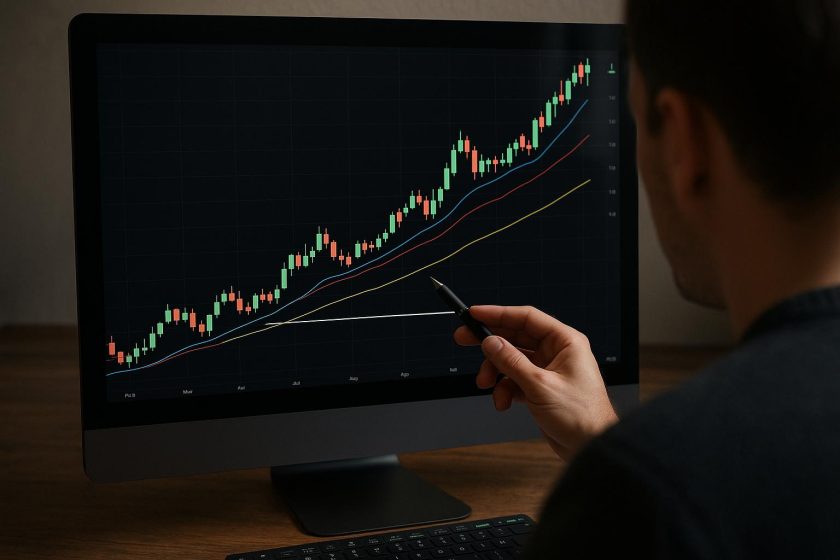
Analyzing past performance is integral to identifying stock setups with a genuine edge. Traders frequently engage in technical analysis, which involves examining charts and identifying patterns. Common tools include techniques such as moving averages, support and resistance levels, and momentum indicators. Nonetheless, it is crucial to understand that while past performance cannot guarantee future results, it can indeed provide valuable insights into potential market behaviors.
Technical Indicators
Within the realm of technical analysis, traders utilize an array of indicators to aid their decision-making processes. Moving averages, for example, help in smoothing out price data to identify trends over a specific period. On the other hand, momentum indicators gauge the speed at which stock prices are changing, which can be pivotal in making informed trade decisions.
Consider Market Conditions
The prevailing market conditions significantly influence whether a stock setup possesses a real edge. Unpredictable events such as political shifts, economic indicators, or sector-specific changes can markedly affect stock performance. Consequently, traders are encouraged to stay informed about these external developments, as they can alter the efficacy of even the most well-crafted trading strategies.
Economic Indicators
Traders should pay close attention to key economic indicators that can impact market conditions. These indicators, such as GDP growth rates, employment figures, and inflation levels, often influence investor sentiment and market movements. Understanding these indicators can provide traders with a more comprehensive view of the broader market environment, aiding in the identification and execution of setups with a real edge.
Evaluate Risk/Reward Ratio
A critical attribute of a stock setup with an edge is the evaluation of a favorable risk/reward ratio. This involves ensuring that the potential gains significantly outweigh the associated risks or possible losses. By adopting a rational approach towards risk management, traders cultivate an environment where their edge can be nurtured and sustained over time.
Setting Stop-Loss and Take-Profit Levels
A pragmatic approach to managing risk involves setting appropriate stop-loss and take-profit levels. Stop-loss levels help minimize potential losses by automatically closing a position when the price reaches a predetermined level, while take-profit levels ensure that gains are realized by closing the position once it reaches a target profit point. Disciplined adherence to these levels is vital to maintaining a favorable risk/reward balance.
Strategy and Discipline
Possessing a real trading edge is only one part of the equation. The trader’s ability to adhere to their formulated strategy and manage emotions also plays a crucial role in overall success. Consistency and discipline in executing trades are imperative. Reacting impulsively or adjusting one’s approach based on fleeting emotions can quickly nullify any potential edge.
Backtesting Strategies
To ascertain the effectiveness of a given strategy, traders engage in backtesting, which involves applying the trading strategy to historical data in order to assess its past performance. This process helps determine whether a particular setup offered a real edge historically. Nonetheless, traders must employ robust backtesting software and methodologies to avoid overfitting data, which could result in false conclusions.
Understanding Overfitting
Overfitting is a scenario where a backtested strategy performs exceptionally well on historical data but fails to deliver similar results in a live trading environment. This occurs when a strategy is overly tailored to past data, capturing noise rather than genuine patterns. Traders should be aware of this risk and strive for strategies that exhibit robust performance across varied data sets.
Seek Expert Insights
While self-analysis is crucial, seeking the insights of seasoned traders or reliable educational resources can provide valuable perspectives. Engaging in trading forums and joining professional trading groups allows for access to analytical tools and opportunities for collaborative learning. Utilizing educational tools from reputable trading platforms can further enrich a trader’s understanding and efficacy.
Mentorship and Networking
Engaging with experienced traders through mentorship programs can be immensely beneficial. Mentors can offer personalized guidance, share valuable lessons from their trading experiences, and provide feedback on strategy development. Networking with peers also fosters an environment of mutual learning, allowing for the exchange of ideas and strategies.
Continuous Evaluation
Given the dynamic nature of financial markets, maintaining a competitive edge in stock trading requires regular evaluation and adjustment of strategies. What provides an edge today may not remain effective indefinitely. As such, traders should develop adaptability and be willing to evolve their strategies in response to new information, market shifts, and technological advancements.
Monitoring Performance
Consistently monitoring the performance of trading setups is crucial for ongoing success. Traders should regularly review trading outcomes to identify trends, areas of strength, and potential weaknesses in their approach. This ongoing evaluation enables timely adjustments that can preserve or enhance a trader’s edge.
Adapting to Technological Advances
As technological advancements redefine the trading landscape, traders must remain abreast of new tools and techniques that can enhance their trading strategies. Algorithmic trading, machine learning, and artificial intelligence are examples of technologies that can provide sophisticated insights and improve decision-making processes. Staying open to adopting new technologies can fortify a trader’s approach and maintain their edge.
By engaging in comprehensive analysis, maintaining discipline, and continuously refining their approach, traders can identify stock setups with a real edge, thereby enhancing their potential for achieving long-term success in the stock market.
This article was last updated on: May 29, 2026